Track Day vs Race Car: What’s the Real Difference?
At a glance, track days and race cars may appear similar. Both involve high-performance driving on closed circuits. In practice, they serve very different purposes and require different levels of preparation, responsibility, and technical support.
Understanding the difference matters for drivers deciding whether they are ready to move beyond recreational performance driving.
What a Track Day Is Designed For
A track day is primarily a driver education and recreational experience. Participants typically drive street-based or lightly modified performance cars in a controlled, non-competitive environment focused on safety and skill development.
Track days emphasize:
Open lapping rather than structured competition
Instructor guidance for learning lines and fundamentals
Minimal technical demands beyond basic vehicle safety
Individual pace rather than repeatable performance
Track days are valuable for learning fundamentals, but they are not designed to replicate race-level conditions.
What Defines a True Race Car
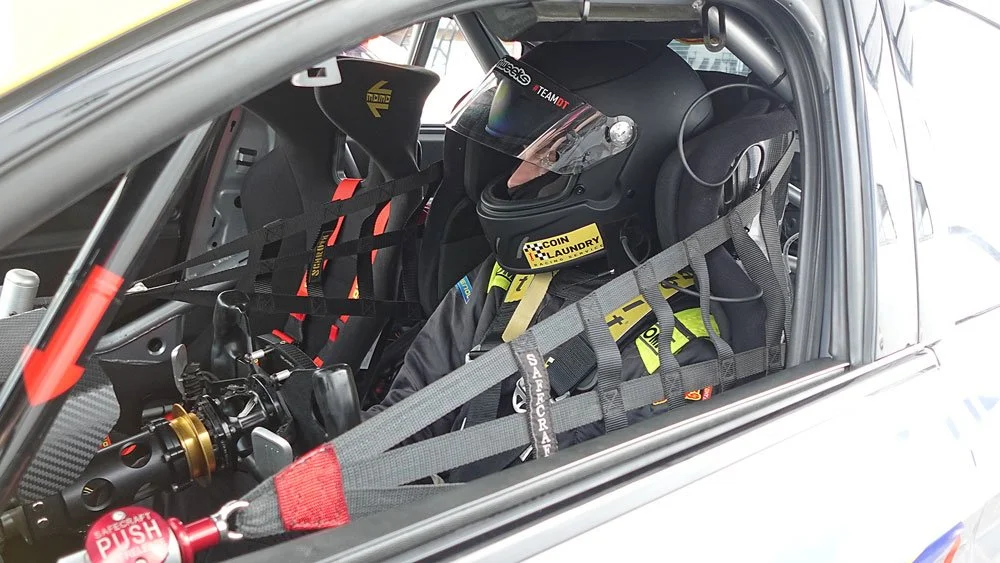
A race car is purpose-built specifically for competition. It is engineered without compromise for durability, safety, and performance under sustained high-load conditions.
Unlike street-based track cars, race cars typically include:
Integrated FIA or professional-grade safety systems
Dedicated aerodynamics and suspension geometry
Sequential racing transmissions
Advanced data acquisition and telemetry
Continuous professional oversight and maintenance
Operating a race car requires discipline, consistency, and respect for the machinery.
Operational Differences That Matter
Beyond the vehicle itself, the environment surrounding a race car is fundamentally different from a track day.
Race car operation involves:
Engineers and mechanics monitoring performance
Structured run plans and feedback loops
Data-driven evaluation between sessions
Higher physical and cognitive load on the driver
Clear expectations around mechanical sympathy and conduct
This is why race-level driving is treated as a progression rather than a casual step.
Why Experience Alone Isn’t the Same as Readiness
Many drivers accumulate significant track time in high-performance street cars. While this experience is valuable, it does not automatically translate to race car readiness.
Race cars demand:
Consistent inputs at speed
Awareness of mechanical limits
Comfort operating within a team structure
The ability to process data and feedback efficiently
For this reason, responsible programs evaluate readiness rather than offering open access.
Where This Transition Fits Within the CLRS Pathway
Within Coin Laundry Racing Service (CLRS), track-day driving and race car operation are treated as distinct phases of development.
The CLRS Elite Driver Program exists specifically to bridge this gap—allowing qualified drivers to experience race machinery within a structured, professionally supported environment before progressing further.
Moving from track days to race cars is not about speed alone. It is about preparation, discipline, and earned progression.